The Next 20: What do the public actually want from AI?
As AI becomes increasingly embedded in society, how do governments ensure policies reflect public expectations?
Artificial intelligence is moving quickly from an emerging technology to something that is increasingly shaping public services and everyday life. Governments around the world are developing AI strategies and policies, but as the technology evolves, an important question remains: how do we ensure the public is part of that conversation?
In this episode of The PSC in Conversation: The Next 20, Shuying Xu is joined by Dr Antonio Weiss to discuss changing public attitudes towards AI, why trust has become such an important issue, and why meaningful public engagement should play a central role in developing AI policy.

Public attitudes towards AI are changing
The conversation begins by exploring how public perceptions of AI have changed in recent years. Drawing on The PSC's work in AI since 2018, Antonio reflects on the shift from relatively limited awareness of machine learning to the widespread attention generated by generative AI. Alongside growing interest, however, public sentiment has also become more cautious.
The discussion explores research showing that many people are increasingly sceptical about the benefits of AI, with attitudes differing across countries and demographic groups. While some nations continue to report high levels of optimism, Antonio argues that the UK has seen a noticeable shift towards greater concern and mistrust.
Why governments need to engage the public
Against that backdrop, Shuying asks whether governments need to do more to involve the public in conversations about AI.
Antonio argues there is a strong case for doing so. As AI becomes a general-purpose technology with implications across society, decisions about its use should not be made solely by policymakers or technology experts.
The discussion considers how public engagement can help governments better understand concerns, explore trade-offs and build confidence in future policy decisions, particularly where technologies are developing rapidly and there is significant uncertainty.
What does a national conversation look like?
The conversation then turns to what meaningful public engagement could involve in practice.
Rather than relying on a single approach, Shuying and Antonio discuss a range of methods, including citizens' panels, consultations, co-design workshops and larger-scale national conversations.
They reflect on examples where government is already taking this approach, including work around digital identity, and discuss The PSC's experience supporting co-production through the Timms Review and wider policy research.
A key theme throughout is that different approaches have different purposes. While large national conversations can help establish broad public expectations, more targeted engagement methods can also play an important role in shaping individual policies and services.
Building public confidence in AI
The discussion concludes by returning to the importance of trust.
As public attitudes towards AI continue to evolve, Antonio argues that governments need to demonstrate not only how AI will be used, but also how decisions are being made and whose voices have informed them.
Without meaningful public engagement, there is a risk that policy moves ahead without public confidence. By involving people earlier in the conversation, governments have an opportunity to build greater legitimacy around the decisions they make and ensure AI develops in ways that reflect society's expectations.
Conclusion
Throughout the conversation, Shuying and Antonio explore why public trust should be considered a fundamental part of AI policy, rather than something addressed after technologies have already been adopted.
As governments continue to develop AI strategies, they argue that national conversations, co-production and deliberative engagement all have an important role to play in ensuring the future of AI is shaped with the public, not simply for the public.
The PSC exists to make public services brilliant. If you want a further conversation about how your organisation can meaningfully use AI in line with user expectations, get in touch with the team.
Latest News & Insights

NHS Planning Guidance 2027/28 : What trusts and ICBs should expect
What should trusts and ICBs expect from the NHS planning guidance for 2027/28? We look at…
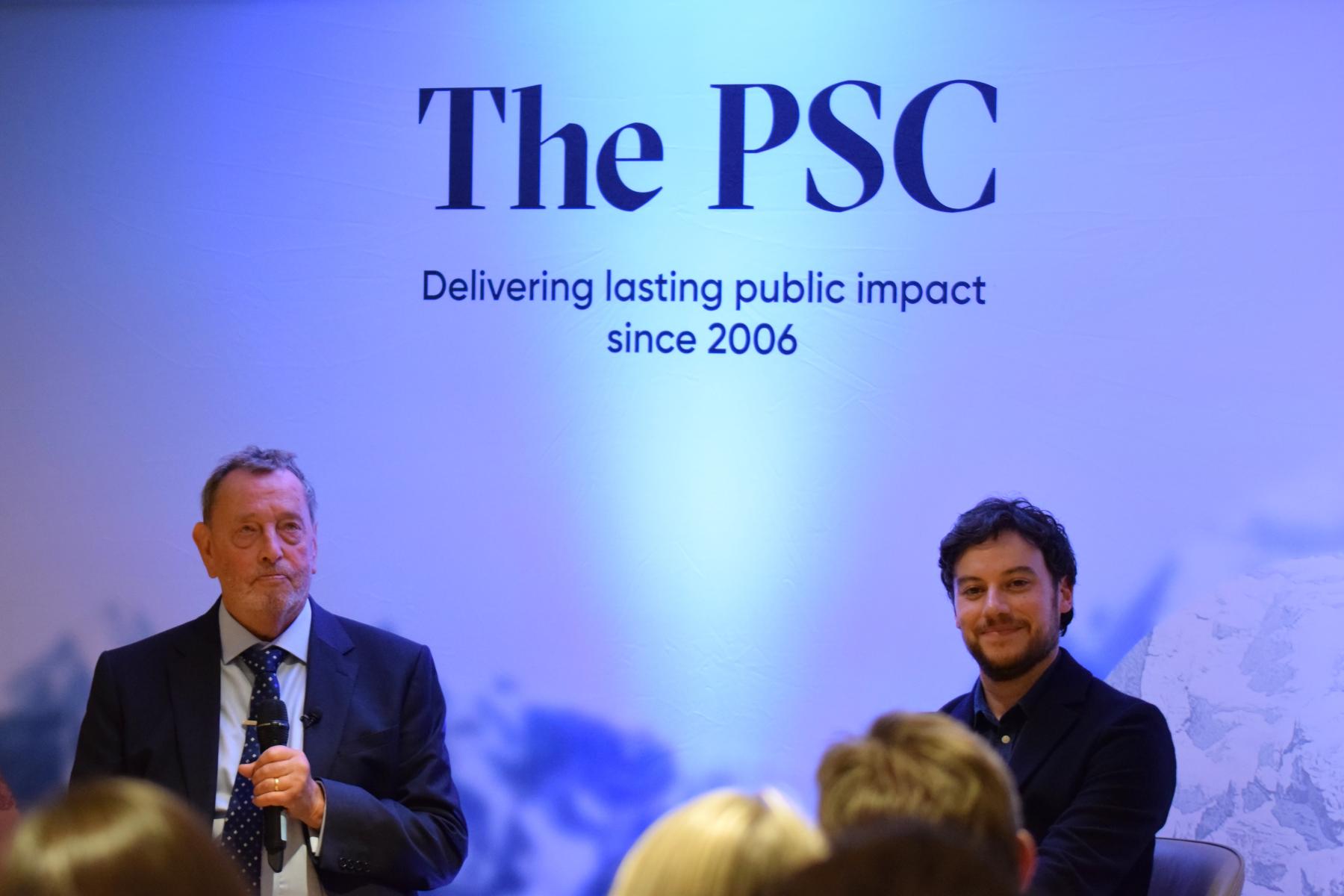
Building from the bottom up: Lord David Blunkett’s Kerslake Memorial Lecture
At our Third Kerslake Memorial Lecture, Lord David Blunkett explored devolution and the future of…

The PSC in Conversation: Turning health data and technology into better care
Caroline Cake, CEO and Co-Founder of Kneu Health and The PSC alumna, joins Antonio Weiss to discuss…