What does it take to deliver lasting change in the NHS?
Dame Amanda Pritchard joins Russell Cake to discuss leading change in the NHS, balancing today’s pressures with tomorrow’s transformation, and the role of technology, partnership and frontline teams in building a sustainable health service.
How can NHS leaders address the pressures facing services today while creating the conditions for a sustainable health service in the future?
In the latest episode of The PSC in Conversation, The PSC Co-Founder Russell Cake speaks to Dame Amanda Pritchard, Chief Executive of Guy’s and St Thomas’ NHS Foundation Trust and former Chief Executive of NHS England.
Drawing on a career spent across different parts of the NHS and government, Amanda reflects on what she has learned about delivering change, the importance of enabling people on the frontline, and where she sees opportunities to transform care in the years ahead.
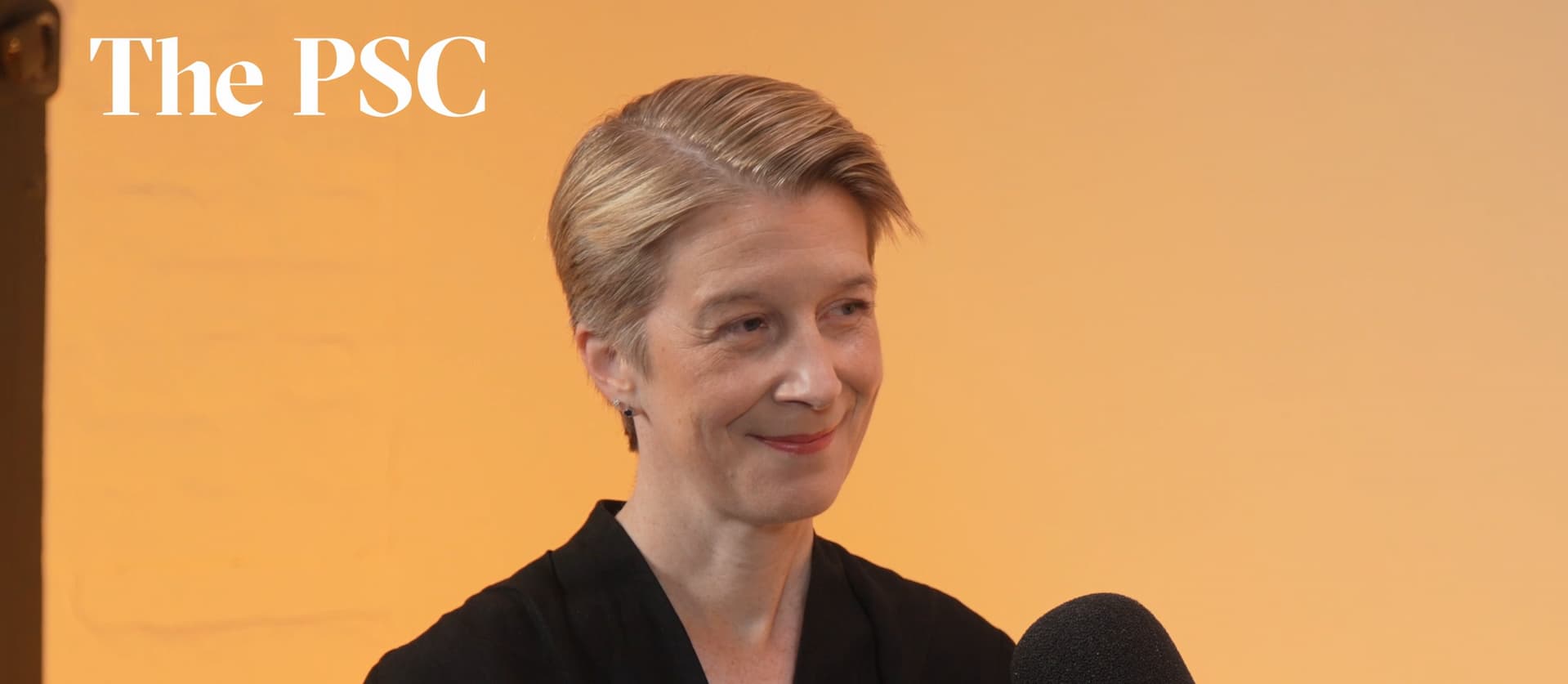
Change cannot be delivered from the centre
Reflecting on her time in the Prime Minister’s Delivery Unit and NHS England, Amanda is clear about where change ultimately happens:
“The people who deliver change are the people who are actually doing the work in the real world.”
For leaders, that means creating the conditions that allow people to make change happen. During COVID, when Amanda led the NHS operational response, that included supporting people to take risks amid huge uncertainty and ensuring those on the frontline knew that senior leaders had their backs.
Longer-term transformation requires something different. Amanda argues that sustainable change comes from having a clear objective, understanding the barriers and then consistently following through – adjusting the approach as evidence emerges rather than expecting transformation to happen overnight.
Building the foundations for transformation
Technology illustrates that approach. Amanda describes the NHS as having historically been around “20 years behind” in its use of technology, but argues that years of investment in electronic patient records, the NHS App and better data connectivity have created foundations on which more transformative tools can now be built.
“You can start doing the really cool stuff where you can put AI and other tools on top of it,” she says, “but if you haven’t got the basic layer, you can’t do it.”
The same principle applies to changes in care. Virtual wards, same day emergency care, frailty services and improvements in primary care infrastructure have progressively created stronger foundations for neighbourhood integration and prevention.
Making space for improvement
One of the hardest challenges for NHS leaders is balancing the pressures of today with the need to prepare for tomorrow.
Amanda describes an “80:20 rule”: leaders need to deliberately protect some of their time for planning and implementing future change, rather than allowing immediate operational demands to consume everything.
At Guy’s and St Thomas’, this is supported through Future Ready, which brings quality improvement and productivity work together and seeks to make improvement part of everyone’s role.
That can range from reducing printing to fundamentally redesigning clinical services. Amanda describes one team that converted inpatient beds into a day facility, ultimately tripling throughput for some cardiac procedures.
Amanda argues that successful improvement combines the technical with the cultural: “NHS is all head [and] heart.” Structure and discipline matter, but so do engagement, recognition and creating a culture in which people feel able to improve the services around them.
Partnership beyond the NHS
The NHS also cannot address the health of its population alone. Amanda points to the importance of working with local partners on the wider determinants of health and creating more integrated services around people and places. Alongside this sits a different kind of partnership with life sciences, technology and the private sector.
“The NHS does not create and make software. We’re not AI engineers,” she says. Working with organisations that have those capabilities therefore offers an opportunity not simply for the NHS to be a customer, but to become a partner in developing new solutions.
Building a sustainable health service
Looking ahead, Amanda identifies three interconnected challenges: helping people remain healthy for longer, delivering care more productively, and creating a modern health service that meets changing public expectations.
She sees reasons for optimism in neighbourhood health, personalisation and technology. With stronger digital foundations now in place, new tools could make it easier for staff to do their jobs, improve communication and give people greater control over their health.
But technology is only part of the answer. The ultimate test is whether the NHS can create something that is “not just financially viable” and able to meet population health needs, but also meets the expectations of the people who rely on it.
What does it take to make public services brilliant? The PSC in Conversation brings together influential leaders to explore the ideas, challenges and opportunities shaping the public sector. Explore our episodes on your preferred podcast channel or YouTube.
Latest News & Insights

The PSC in Conversation: Beyond efficiency – how could AI transform public services?
Dr David Gérouville-Farrell joins Dr Antonio Weiss to explore how AI could reshape public services,…
Scan4Safety: How scanning technology is improving patient safety and NHS productivity
Ten years after the launch of Scan4Safety, what can we learn about its impact on patient safety and…

Before the 2027/28 NHS planning guidance lands - how trusts and ICBs can strengthen their plans
Last year’s medium-term planning cycle moved quickly. We set out how trusts and ICBs can use the…