The PSC in Conversation: Putting people at the heart of their care: Patient editable access on the Universal Care Plan
Since patient editable access to London's Universal Care Plan launched through the NHS App, thousands of patients have begun inputting into their plans. We reflect on progress so far, what early adoption has taught the team and what comes next.
Earlier this year, the Universal Care Plan took an important step towards putting patients more directly at the centre of their care, introducing patient editable access through the NHS App. In the latest episode of The PSC in Conversation, Dr Fiona Jamieson speaks to Nick Tigere, Head of the Universal Care Plan programme for London, Tom Ince, Clinical Transformation Lead, and The PSC's Hailey Blanchard to reflect on the journey so far.
They discuss why patient editable access was introduced, what the team has learned since launch and how those lessons are informing the next stage of development.

From viewing a care plan to co-creating it
The Universal Care Plan is used across London, enabling professionals across primary, secondary, acute, community and social care to access information about an individual's care. Originally launched in 2022 to support people approaching the end of life, it has since expanded to support people with sickle cell disease, dementia and frailty, children and young people, and people with learning disabilities and autism.
Patient editable access represents another significant development. Rather than patients simply being able to view their plan, they can now contribute information themselves through the NHS App. As Nick explains, that could include their wishes and preferences or very practical information about what matters to them – right down to who should look after a pet if they become unwell. Clinical decisions remain with clinicians, but patients can become a “co-creator and a co-author” of their plan.
The plan is also designed to change with the person. Patients can return and update their information as often as they need to, making it a live source of information rather than a static document.
Learning from early adoption
Rather than trying to introduce everything at once, the team has deliberately taken an iterative approach. Patient editable access went live on 13 May, with particular engagement focused around 24 early-adopter GP practices. Since then, around 600–700 care plans have been created each week, with patients responsible for more than 10% of plans being created. More than a third of patient-created plans where information has been submitted have subsequently been reviewed by a health or care professional.
But the early data is also helping identify where more work is needed. Patients at early-adopter practices are around five times more likely to complete a Universal Care Plan than those elsewhere, with that figure rising to ten times at several practices. The team is now exploring what is driving the difference – including communications, targeted support and inviting particular patient groups to complete their plans.
As Tom puts it: “We don't believe in doing everything at once and do it perfectly.” Instead, the approach is to introduce something, understand how people use it and build from there.
Designing with patients, not just for them
Before the launch of patient editable access, The PSC supported public engagement with older adults, carers, people from ethnic minority backgrounds and adults with multiple comorbidities to understand potential barriers and what different groups valued from the Universal Care Plan.
Those conversations highlighted that there is no single experience of care planning. Older adults were particularly interested in recording what mattered most to them, while carers valued contingency planning. Different groups also needed different communications and levels of support.
Trusted organisations and individuals proved important too. Working with organisations including Age UK helped people engage with the technology, while people with lived experience could explain in practical terms how they had used the Universal Care Plan themselves.
For Hailey, this demonstrates the wider value of involving people in service design: “making sure that services are designed for the people that are using them.”
What comes next?
The next stage combines further development with a continued focus on making better use of what already exists. Planned improvements include making the NHS App experience more user-friendly, exploring NHS Notify so patients could be told when their plan has been created or updated, and developing proxy access for people who need someone else to manage their plan on their behalf.
But for Nick, new functionality is only part of the answer. The bigger question is how the Universal Care Plan becomes embedded into pathways and everyday care – and how the team can learn from patients who begin a plan but don't yet go on to submit information.
There is also an opportunity to reduce duplication for professionals while giving patients greater ownership of their information. Done well, that could mean clinicians spend less time entering information and more time having better-informed conversations with patients.
As Nick concludes, the focus is not simply on what could be added next, but “how do we better use what we've got now?”
That combination of continued development, learning from real-world use and involving patients in the process offers an opportunity to keep moving towards more personalised, joined-up care – with patients playing an active role in shaping it.
The PSC is a specialist management consultancy dedicated to making public services brilliant. If you would like to find out more about how we can support you to deliver digital services designed for and alongside users, get in touch with the team.
Latest News & Insights
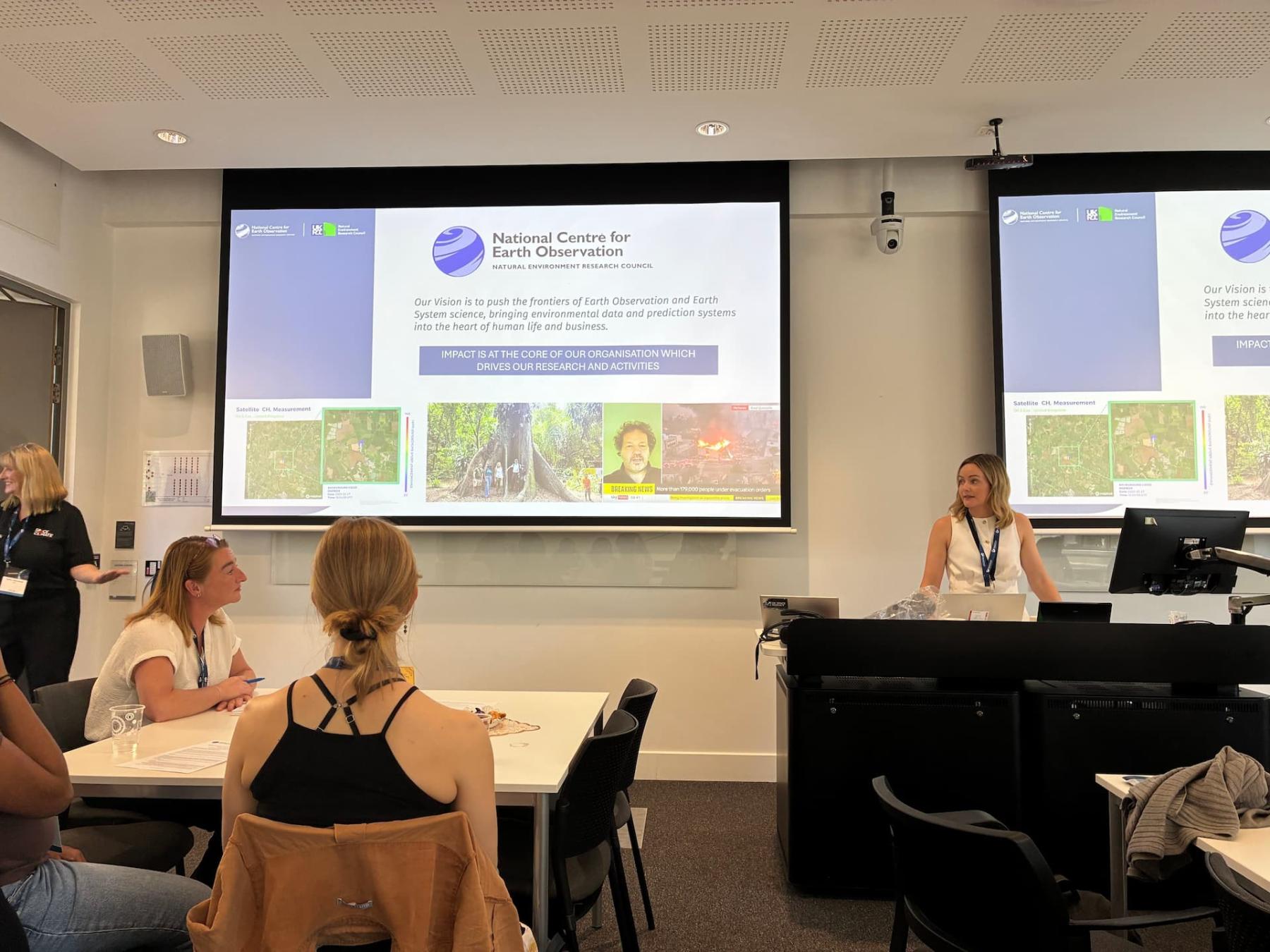
What we heard at the UK Earth Observations Conference: from data supply to use
Insights from the UK Earth Observation Conference on a sector rich in data – and the challenge of…

What’s it like being a Space Agency intern at The PSC?
This summer, The PSC welcomed an intern to spend eight weeks supporting our work on Monitor Space…

The PSC in Conversation: Can space and satellite technology help meet our energy needs?
Alex Wates is joined by Phil Buckley, Sam Adlen and Lord David Willetts to explore how space and…