The PSC in Conversation: Can space and satellite technology help meet our energy needs?
Alex Wates is joined by Phil Buckley, Sam Adlen and Lord David Willetts to explore how space and satellite technology could support the UK’s energy system, from space-based solar power and orbital data centres to net zero, resilience and Earth observation.
Energy demand is growing rapidly, driven by everything from electrification to the expansion of AI and data centres, while the UK is simultaneously trying to decarbonise its energy system and maintain security and affordability. Could part of the answer lie beyond Earth?
In the latest episode of The PSC in Conversation, Alex Wates is joined by Phil Buckley, Partner at The PSC, Sam Adlen, Co-CEO of Space Solar, and Lord David Willetts, President of Resolution Foundation and Chair of the UK Space Agency, to explore how space and satellite technology could help meet these competing demands. They discuss the potential of space-based solar power, the growing energy requirements of AI, the role satellites already play in our energy infrastructure, and the sustainability and regulatory questions that come with increasing activity in orbit.
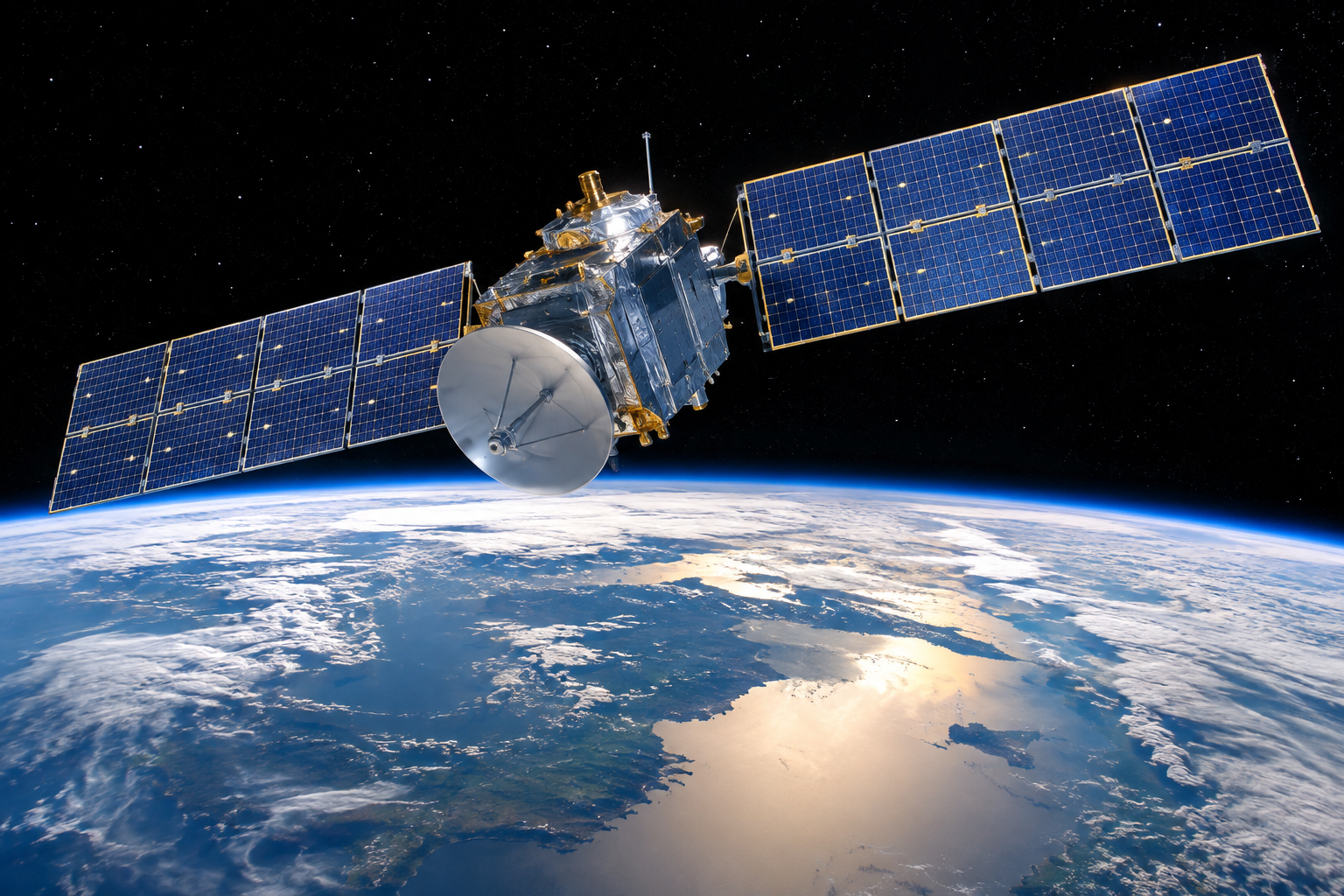
From monitoring energy to generating it
David begins by pointing out that the relationship between space and energy is not new. The demands of operating in space have helped drive innovation in technologies including solar cells, while satellites have also become an important source of information about how energy is used on Earth.
Sam describes this as the distinction between what space does today and what it could increasingly do in the future. Satellites already help us to “manage, monitor, maintain both the energy system and, in fact, the planet”, but falling launch costs and reusable launch systems are creating the potential for a much more material role.
One opportunity is space-based solar power, where large solar arrays capture energy in space and transmit it wirelessly back to Earth. Another is orbital data centres, where both the energy generation and computing infrastructure would sit in space.
From meeting demand to energy abundance
For Sam, the scale of the opportunity means the conversation could eventually move beyond simply meeting growing demand.
“Space solar power is the thing that then means we start to talk about abundance rather than just meeting demand.”
He points to the tension between the UK’s ambitions around AI and the energy required to support them, arguing that expected demand from data centres alone illustrates the scale of the challenge. More broadly, he sees space as an opportunity to help “square the circle between economic growth and sustainability”.
Space-based solar is not intended to replace every other energy source. Sam argues that resilience comes from diversity, with different technologies carrying different risks. Space Solar is targeting a megawatt-scale pilot within five years, followed by gigawatt-scale systems within a decade, with Sam describing the challenge as one of engineering and economics rather than unresolved fundamental physics.
What role should government play?
The conversation also considers whether government should actively support space-based solar as part of its wider energy and space strategies.
David notes that in-orbit servicing and manufacturing is already a priority within UK space policy and argues that space-based solar fits within that agenda. He also identifies a strategic choice emerging around AI infrastructure – whether energy should be generated in space and transmitted to data centres on Earth, or whether the data centres themselves should increasingly move into orbit.
These questions become more significant as global competition develops. The discussion considers the UK’s existing capabilities and the potential economic spillovers into areas such as robotics and wireless power transmission, alongside the need to maintain a position in a rapidly developing international market.
Using space sustainably
Greater reliance on space also creates new challenges; David highlights the potential environmental consequences of dramatically increasing the number of satellites in orbit. Satellites are commonly disposed of by allowing them to burn up during re-entry, but at much greater scale this could introduce significant quantities of material into the upper atmosphere.
“I think we have a responsibility to use space well.”
Sam agrees that the current model will be tested as activity increases, arguing that a future involving vastly greater numbers of satellites requires us to reconsider the existing “single use” approach.
The same scrutiny applies to launch emissions – Sam says that space-based solar has a carbon payback of around six months, while acknowledging that the environmental equation will need to continue to be assessed if launch activity increases significantly.
Our energy system already depends on space
While much of the conversation looks ahead, Phil brings the discussion back to something easier to overlook – the extent to which energy infrastructure already depends on satellites. Positioning, navigation and timing services support smart grids, while satellite-enabled weather forecasting helps renewable energy infrastructure operate more efficiently.
“There’s just a whole load of reliance on space and satellite tech that we just now take for granted.”
Earth observation is also becoming increasingly precise. David describes how satellites can identify individual sources of methane emissions and monitor heat loss, creating opportunities to understand environmental impact and hold organisations to account.
As Alex concludes, the opportunity therefore has two sides: using space to enhance and better understand the energy systems we already have, while exploring entirely new sources of supply to meet growing demand. Space-based solar remains an emerging technology, but the wider conversation makes clear that the relationship between our energy system and space is already much closer than many of us realise.
The PSC exists to make public services brilliant. In our new podcast mini-series, we're exploring whether space and satellite technology can solve some of the public sector's biggest challenges. If you want to discuss any topics explored in this series further, get in touch with Phil Buckley – we'd love to have a conversation.
Latest News & Insights

NHS Planning Guidance 2027/28 : What trusts and ICBs should expect
What should trusts and ICBs expect from the NHS planning guidance for 2027/28? We look at…
Building from the bottom up: Lord David Blunkett’s Kerslake Memorial Lecture
At our Third Kerslake Memorial Lecture, Lord David Blunkett explored devolution and the future of…
The PSC in Conversation: Turning health data and technology into better care
Caroline Cake, CEO and Co-Founder of Kneu Health and The PSC alumna, joins Antonio Weiss to discuss…