The PSC in Conversation: Can space help tackle crime?
How satellite technology could support policing, strengthen intelligence and tackle cross-border crime – while raising important questions about regulation, privacy and public trust.
Satellite technology is already transforming how we monitor our environment, manage infrastructure and respond to emergencies. But could it also play a meaningful role in tackling crime?
In the latest episode of The PSC in Conversation, host Alex Wates is joined by Phil Buckley, Partner at The PSC, Dr Becky Alexis-Martin, Course Director for the MA in International Relations and Emerging Technologies at the University of Bradford, and Martin Watton, Partner for Public Sector at BIP UK, to explore how Earth observation and satellite technology could support policing and the wider justice system.
From environmental crime and organised criminal networks to privacy, regulation and public trust, the discussion examines both the opportunities and the limitations of using space-based technologies in crime and justice.
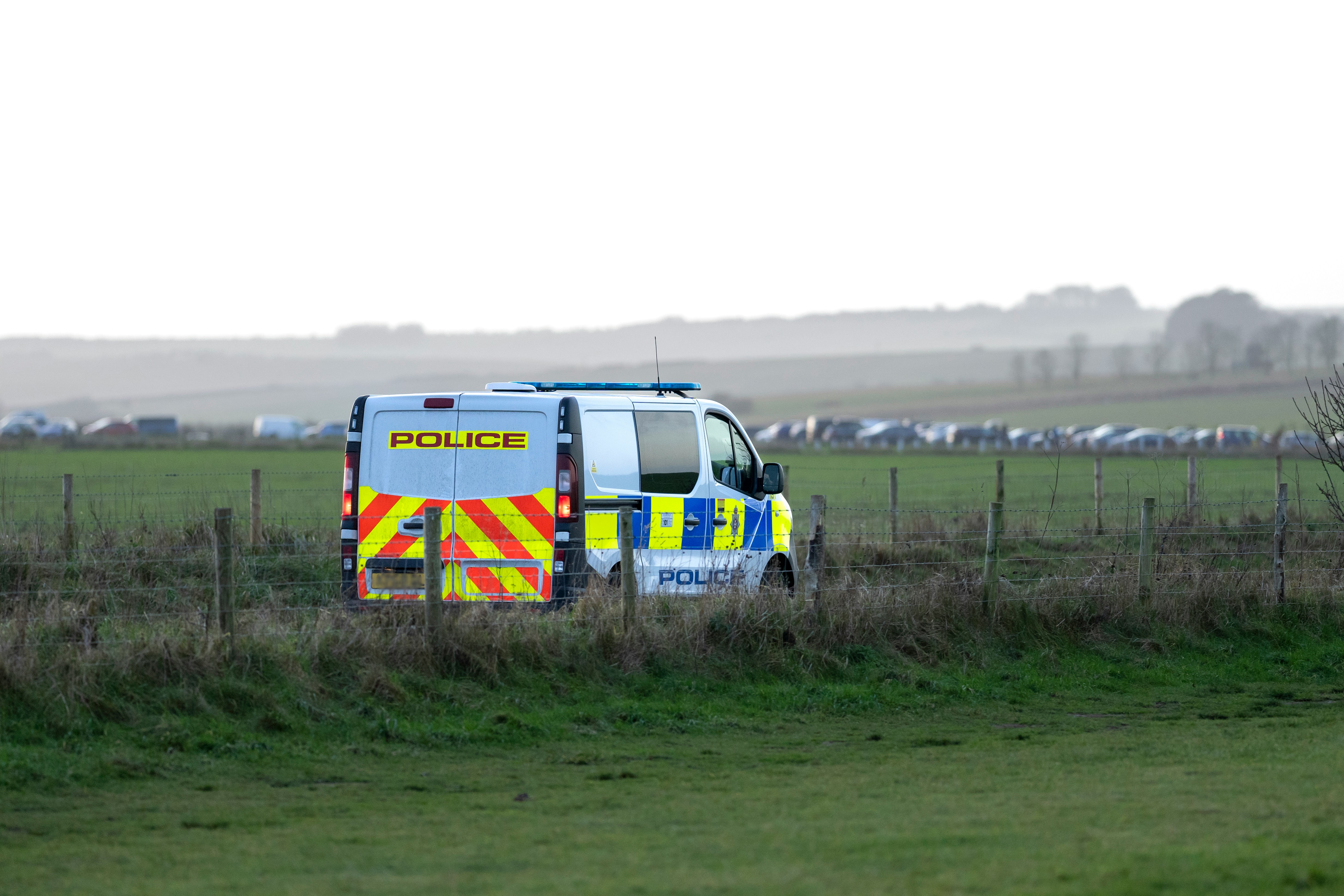
Satellite data is one piece of the intelligence picture
Early in the discussion, Martin identifies two areas where satellite technology could make the biggest contribution to law enforcement: communications and surveillance.
While emergency services already rely on satellite-enabled communications in many situations, the conversation focuses primarily on Earth observation and the value of seeing activity from above. Rather than replacing helicopters or drones, satellites offer another way of monitoring large areas, particularly where traditional methods are costly, difficult or impractical.
Becky expands on this by explaining that satellite technology is particularly effective at identifying patterns, systems and environments of crime.
"It's good for rural crime, really good for cross-border and international networks, and really good for any activity that leaves a physical trace."
That distinction is made throughout the episode; satellite imagery can reveal changes in landscapes, movement, infrastructure and environmental impacts, but it cannot explain intent or motivation.
As Becky notes: "They show capability, but they don't show intent."
Similarly, Martin emphasises that satellite imagery should never be viewed as definitive evidence on its own. Instead, it becomes one part of a much broader intelligence picture that can support investigations alongside other information sources.
Looking beyond the crime scene
Many of the examples discussed move beyond traditional policing to focus on crimes that are difficult to detect through conventional means.
Becky highlights environmental crime, illegal mining, illegal fishing and cross-border smuggling as areas where satellite technology is already making a difference. She points to initiatives such as Global Fishing Watch, which uses satellite monitoring to identify suspicious fishing activity across international waters, and explains how repeated satellite observations can reveal hotspots that may otherwise go unnoticed.
The conversation also explores how satellite imagery has helped monitor suspected nuclear activity in countries such as North Korea and Iran. By combining optical imagery, thermal data and synthetic aperture radar, analysts have been able to identify changes in infrastructure and reactor activity that would have been difficult to observe independently.
For Becky, one of the biggest advantages of satellite technology is that it allows governments to move beyond simply responding after an incident has occurred. Rather than reacting to crime, satellite data can support risk mapping, hotspot detection and targeted patrols, helping agencies deploy resources more effectively before greater harm occurs.
From cannabis farms to organised crime
One of the more accessible examples discussed is the use of satellite imagery to identify illegal cannabis cultivation.
The panel explores whether thermal imagery and repeated satellite observations could help identify sites that warrant further investigation. Rather than suggesting satellites could detect criminal activity directly, the discussion reinforces a recurring theme throughout the episode: technology provides indicators that help investigators know where to look next.
Martin repeatedly returns to the importance of using satellite information as part of a wider evidence base rather than relying on it in isolation.
As he explains, satellite imagery is "potentially one piece of the puzzle."
This principle applies equally to tackling organised crime, environmental offences and international criminal networks. The value lies in combining satellite-derived intelligence with other operational information to build a stronger understanding of what is happening.
Technology raises new questions
While much of the discussion focuses on opportunity, Alex, Phil, Becky and Martin also explore the challenges that accompany greater use of satellite technology.
Questions around regulation, accountability and governance become increasingly important as commercial satellite capability expands. The panel discusses who is responsible for regulating activity in space, how governments should manage the growing number of satellites in orbit, and what happens when those satellites eventually reach the end of their operational life.
The conversation then turns to privacy and surveillance.
Although satellites are often perceived as intrusive, Martin argues that they should be considered alongside other technologies already used by law enforcement.
"Satellite is fairly low intrusion."
Rather than focusing on individuals, satellite imagery is typically used to observe broader environmental changes, infrastructure or movement across large geographic areas. Nevertheless, the panel agrees that maintaining public trust will depend on clear governance, transparency and appropriate safeguards.
Technology can support policing – but it can't replace it
Perhaps the strongest message from the discussion is that technology alone cannot solve complex social problems.
Satellite imagery can help identify risks, improve situational awareness and strengthen intelligence, but effective policing still depends on people, judgement and collaboration across organisations.
As Becky puts it, satellite technology can inform policing at a local, national and international level, "but it can't replace it."
Martin reinforces the same point later in the discussion, arguing that while technology can significantly improve decision-making, public services must avoid assuming that better observation automatically leads to better outcomes.
Satellite technology is another tool available to decision-makers – one that becomes most valuable when integrated with local knowledge, operational expertise and other sources of intelligence. Increasingly, the challenge is understanding how they can be used responsibly, proportionately and effectively alongside the people and institutions responsible for keeping communities safe.
The PSC exists to make public services brilliant. In our new podcast mini-series, we're exploring whether space and satellite technology can solve some of the public sector's biggest challenges. If you want to discuss any topics explored in this series further, get in touch with Phil Buckley – we'd love to have a conversation.
Latest News & Insights
Scan4Safety: How scanning technology is improving patient safety and NHS productivity
Ten years after the launch of Scan4Safety, what can we learn about its impact on patient safety and…

Before the 2027/28 NHS planning guidance lands - how trusts and ICBs can strengthen their plans
Last year’s medium-term planning cycle moved quickly. We set out how trusts and ICBs can use the…

What does it take to deliver lasting change in the NHS?
Dame Amanda Pritchard joins Russell Cake to discuss leading change in the NHS, balancing today’s…