What’s it like being a Space Agency intern at The PSC?
This summer, The PSC welcomed an intern to spend eight weeks supporting our work on Monitor Space Hazards, as part of UK Space Agency’s first Skills for Space internship scheme.
This summer The PSC participated in the UK Space Agency’s first ever Skills for Space internship scheme. The scheme, designed to widen access to space careers, funded placements with organisations across the UK’s space sector.
Space careers stretch well beyond engineering and rocket science. The PSC has worked in the UK Space sector for over five years, supporting both the UK Space Agency and UK satellite operators. Our Skills for Space intern spent 8 weeks at The PSC working on our longest-running space project, Monitor Space Hazards - we asked him about his experience.

What is Monitor Space Hazards?
Monitor Space Hazards is the government's platform for tracking satellites in orbit. It flags when two objects might collide, called conjunctions, and follows debris when things break up or fall back to earth. The point is to protect satellites, and people, especially as the number of objects we have in space increases each year!
What was your role?
The project had a few things going on! So, each month the team at the National Space Operations Centre, NSpOC, pulls together space hazard stats to brief senior officials, and part of my work was understanding how those numbers are built and where they could be automated. That meant getting deep into the MSH API ( a connector to pull data between two services) and the raw data orbital analysts upload, things like ephemerides, conjunction data messages that carry the probability of collision, and re-entry predictions. Producing the stats meant understanding those inputs, the models behind them, and the calculations on top, so I could use the data in the right way. Around that, there was research, building, and documentation to make sure the work could carry on after me!
What did you find most challenging, and how did you solve it?
Over my internship, I had several meetings with the NSpOC team members who currently compile the statistics - first to understand what they would need from an automated dashboard, then to get feedback on my prototypes. Although I had the technical knowledge, the prospect of leading meetings and showing my work to clients felt intimidating and I was nervous to present! Having the team around helped a lot - we’d rehearse my presentations beforehand and after each meeting they gave pointers - in the end, I felt like I had built a real positive relationship with the client team.
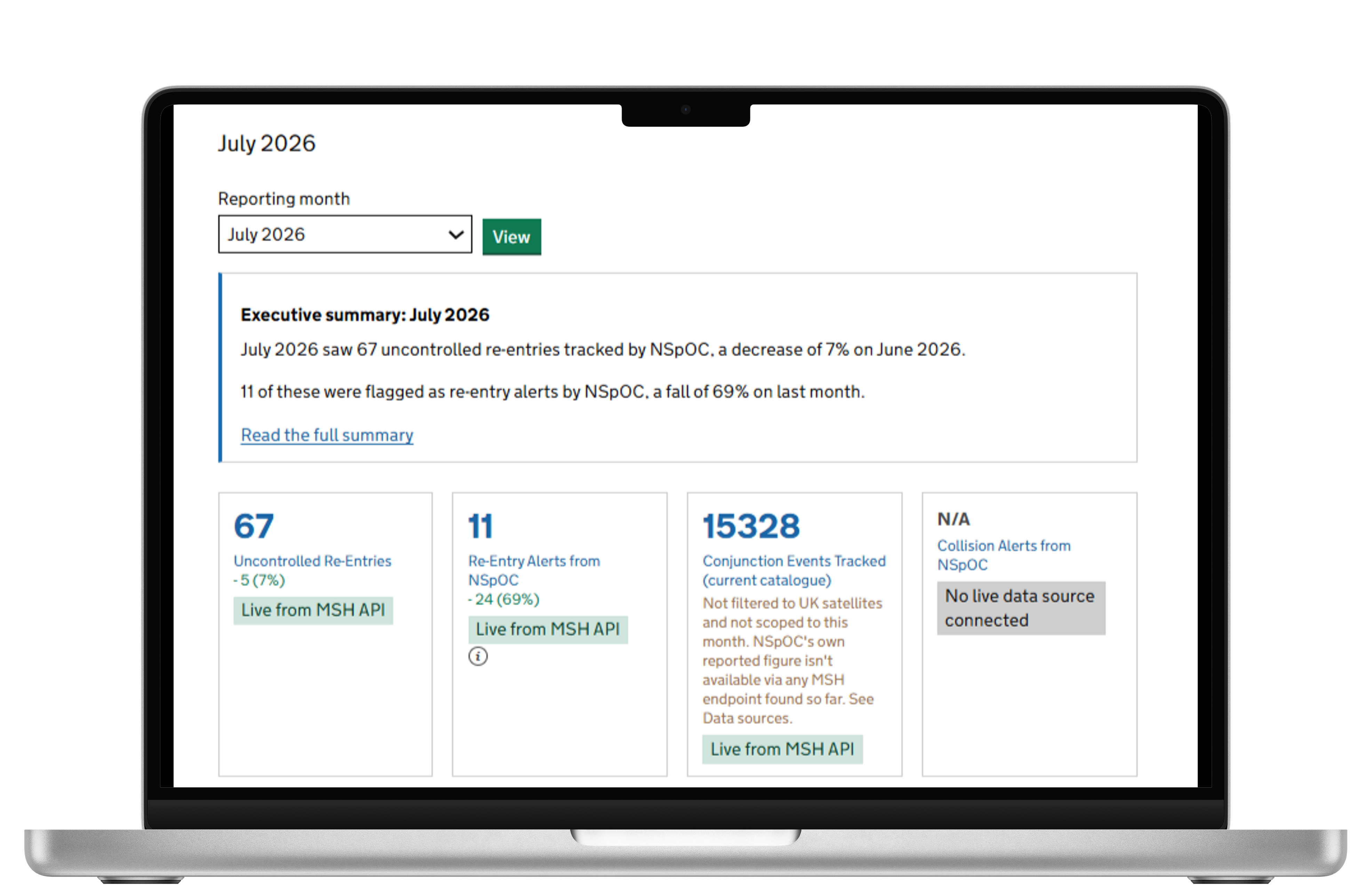
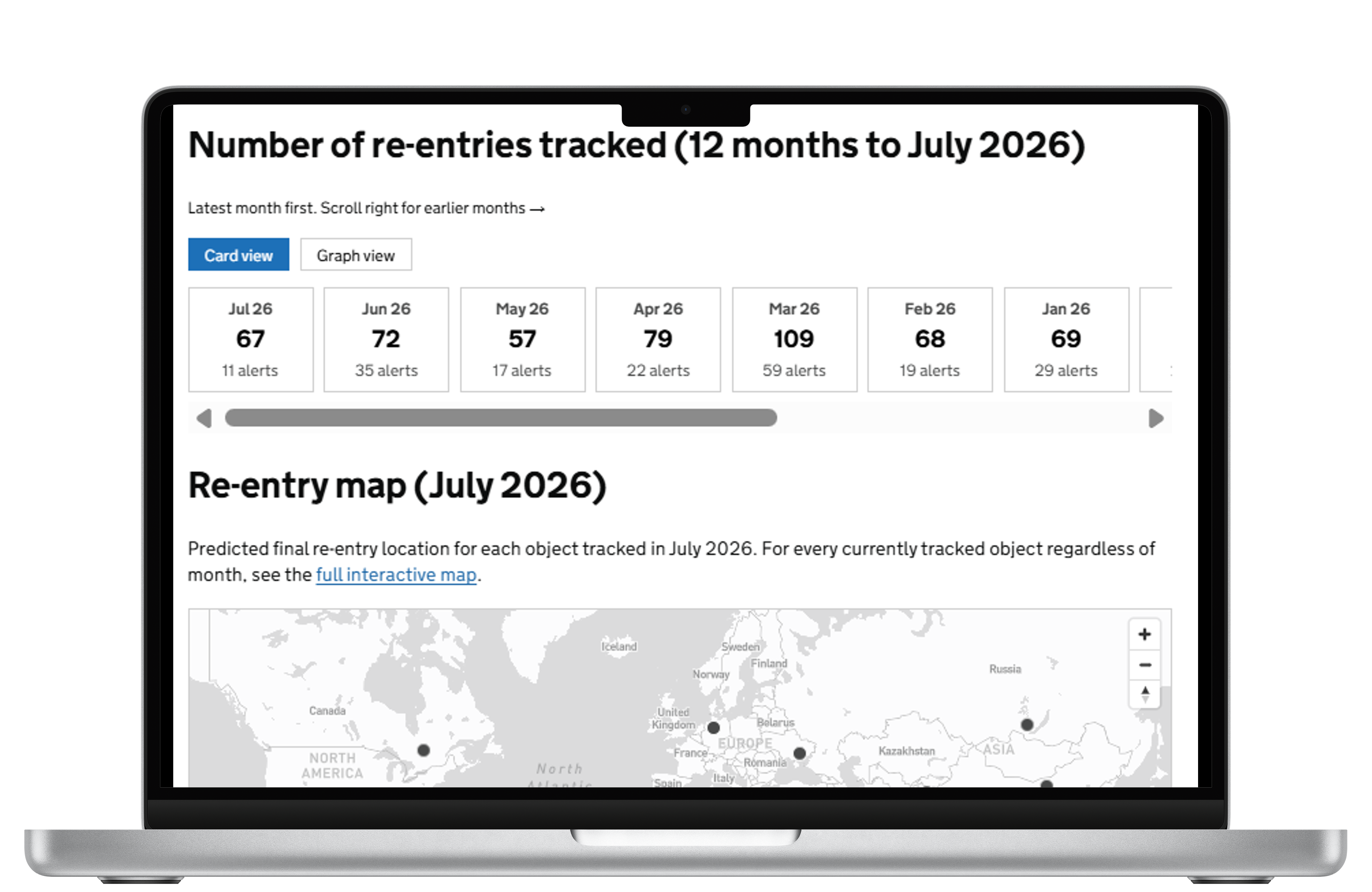
Varmisan’s working prototype of a space hazard statistics dashboard
Was there a moment you felt you'd properly levelled up?
It was during a client meeting about how NSpOC actually runs their workflows. There were extra complexities that normally would have gone over my head, but I found myself following the calculations and realised I started understanding the technicalities behind Monitor Space Hazards. That was a milestone I didn't think I'd hit so quickly.
What made you apply for the UK Skills for Space internship in the first place?
I saw the role, and didn’t have a clue initially about anything in space, but thought that it would be a cool industry to work in, so did a bit more research into whether my background can actually help. As I do quite a quantitative degree, I didn't realise how much my skills can directly translate into the space industry, where I learnt that it is not just about launching rockets into space, and there’s much more to it!
What's actually surprised you, good or bad, about the reality of the internship?
I was surprised that though I had technical skills, navigating the Monitor Space Hazards platform was tricky. There are lots going on behind the scenes, with various ways data is ingested, and lots of calculations across many things. My technical knowledge wasn’t enough to get me up to pace. I had to quickly understand certain calculations so I could then work out how to present figures in the correct way, and doing this over the hundreds of data points was a challenge! However, after working on it for some time, and asking questions to my team, it became easier to understand a lot more of the technicalities and each day I’m always learning something new!
Varmisan was an intern at The PSC through the UK Space Agency Skills for Space scheme. If the scheme runs in 2027, we’ll publish information as soon as possible about how to apply.
The PSC also runs its own internship scheme, taking 2 interns for 8 weeks of hands-on project experience. Find out more about our own internship scheme and how to apply: https://thepsc.co.uk/careers/interns/
Latest News & Insights

NHS Planning Guidance 2027/28 : What trusts and ICBs should expect
What should trusts and ICBs expect from the NHS planning guidance for 2027/28? We look at…
Building from the bottom up: Lord David Blunkett’s Kerslake Memorial Lecture
At our Third Kerslake Memorial Lecture, Lord David Blunkett explored devolution and the future of…

The PSC in Conversation: Turning health data and technology into better care
Caroline Cake, CEO and Co-Founder of Kneu Health and The PSC alumna, joins Antonio Weiss to discuss…