The Neighbourhood Health Framework: what it means for systems and leaders
The Neighbourhood Health Framework explained – key goals, delivery models and what it means for ICBs, funding shifts and moving care from acute settings into communities
The Department of Health & Social Care and NHS England have published the much-awaited Neighbourhood Health Framework, providing more definition to one of the major goals in the 10 year plan. The ambition is clear, supported by specific measurable goals for impact, and local leaders are likely to welcome the flexibility to translate ambition locally. But two critical factors will determine whether a neighbourhood health service can be delivered in practice.
The first is money. There is no new funding. Practically this means the shift to neighbourhood care must be financed primarily by moving resource out of the acute sector. This is easy to say and hard to do.
The second is place. The framework positions place-based partnerships as the critical intermediary between ICB-level commissioning and neighbourhood level delivery, playing a central role in both strategic commissioning and accountability for neighbourhood services. Place-based capacity and partnership maturity across England is deeply uneven, and under continuing pressure as ICB clustering puts even greater constraint on place-based resource.
The framework sets a compelling direction. Now systems must answer the question of how funding and resource will follow patients into the community. Without an answer to this, the ambition of the framework is unlikely to be met. Below, we summarise the key goals of the framework and what they mean in practice.

The five goals
The framework is structured around five goals linked to the medium term planning framework, each with defined objectives and national minimum metrics.
- Improve health outcomes better identification and proactive support for people with frailty, care home residents, housebound patients, those approaching end of life, people with long-term conditions, and children and young people.
- Improve access to general practice same-day access for clinically urgent patients, faster routine appointments, and improved patient satisfaction with GP access.
- Improve experience of planned care reduced variation in outpatient referrals through single points of access and MDT models, with more follow-up care shifted into neighbourhood settings.
- Better urgent and emergency care performance stronger community-based reactive care, fewer avoidable ambulance conveyances, and improved discharge co-ordination.
- Improve patient and staff satisfaction more proactive, personalised care with agreed care plans, and a better working environment for neighbourhood teams.
Implementation runs in two stages: immediate changes in 2026/27, followed by longer-term reform through to March 2029.
What this means in practice
The framework asks ICBS to lay the foundations for change by agreeing geographies, establishing neighbourhood teams and developing local plans, aligned with strategic commissioning intentions in 26/27.
On provider arrangements, the framework confirms the contracting models trailed in the 10year plan: single neighbourhood providers, multi-neighbourhood providers (MNP), and integrated health organisations (IHO). The detail of those contracts is still being worked through, and how the different models will interact in practice, particularly where MNP and IHO arrangements coexist, remains an open question.
On place readiness: the framework gives place-based partnerships a central role in coordinating governance and accountability between ICB-level commissioning and neighbourhood delivery. This is a significant ask. Place-based partnerships vary enormously in their maturity and capacity, and ICB clustering risks widening the distance between strategic decision-making and local delivery. Systems will need to make an honest assessment of the readiness of their places and invest in the leadership, resource and relationships that effective place-based working requires.
The ambition for Neighbourhood Health Centres gets a little more detail – 250 delivered by 2035, 120 of those by 2030, with a number of refurbishments taking early priority. The goal for many of these to be supported by new public-private partnerships (a reformed private finance model that addresses the well-publicised challenges of PFI), already known from the 10 year plan, is restated.
On finance, the expectation is reprioritisation – not new money. ICBs are expected to identify funding through active local prioritisation, with national arrangements increasingly supporting a shift from acute to neighbourhood settings through changes to block contracts and payment flows.
Why it matters
The challenges facing our healthcare system – population change, inflationary pressures, and technological change – are all pushing up the cost of care. Over time, more and more money has spent on secondary care, constraining investment in public health, prevention, primary care, community and mental health services. Changing this has been a national ambition for a long time, but the trend has continued. Will this be a genuine point of inflection for a left shift in the delivery of care and resources?
Where to start?
Systems can accelerate progress by clearly defining the future model(s) of care needed to meet local population needs, this means defining the clinical model itself as well as the funding and resource required to deliver it. Read the blog we wrote at the publication of the 10-year plan setting out how NHS leaders scale proactive care & personalised care planning for better prevention by 2027.
If you would like to discuss what this means for your organisation, system or place, we would be happy to talk it through - get in touch with Elanor Bond or Joe Cruden.
Latest News & Insights
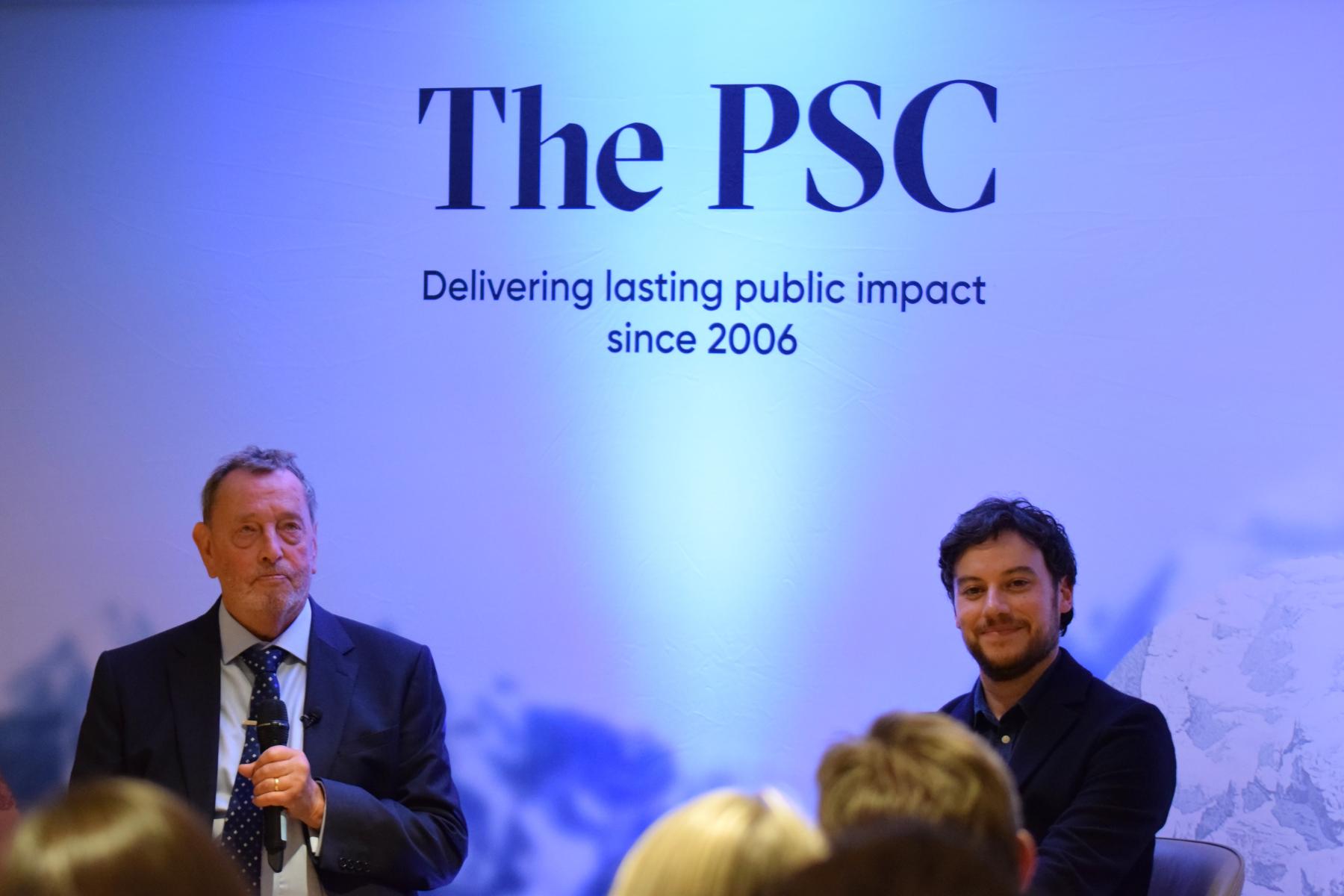
Building from the bottom up: Lord David Blunkett’s Kerslake Memorial Lecture
At our Third Kerslake Memorial Lecture, Lord David Blunkett explored devolution and the future of…

The PSC in Conversation: Turning health data and technology into better care
Caroline Cake, CEO and Co-Founder of Kneu Health and The PSC alumna, joins Antonio Weiss to discuss…

The PSC in Conversation: Putting people at the heart of their care: Patient editable access on the Universal Care Plan
Since patient editable access to London's Universal Care Plan launched through the NHS App,…