The Next 20: The future of Primary Care
Primary care is under pressure to deliver faster access, better outcomes and more preventative care. Here, Eli Bond, Simon Wheatley and Matthew Walker explore what that means in practice – and why the future depends on getting the fundamentals right.
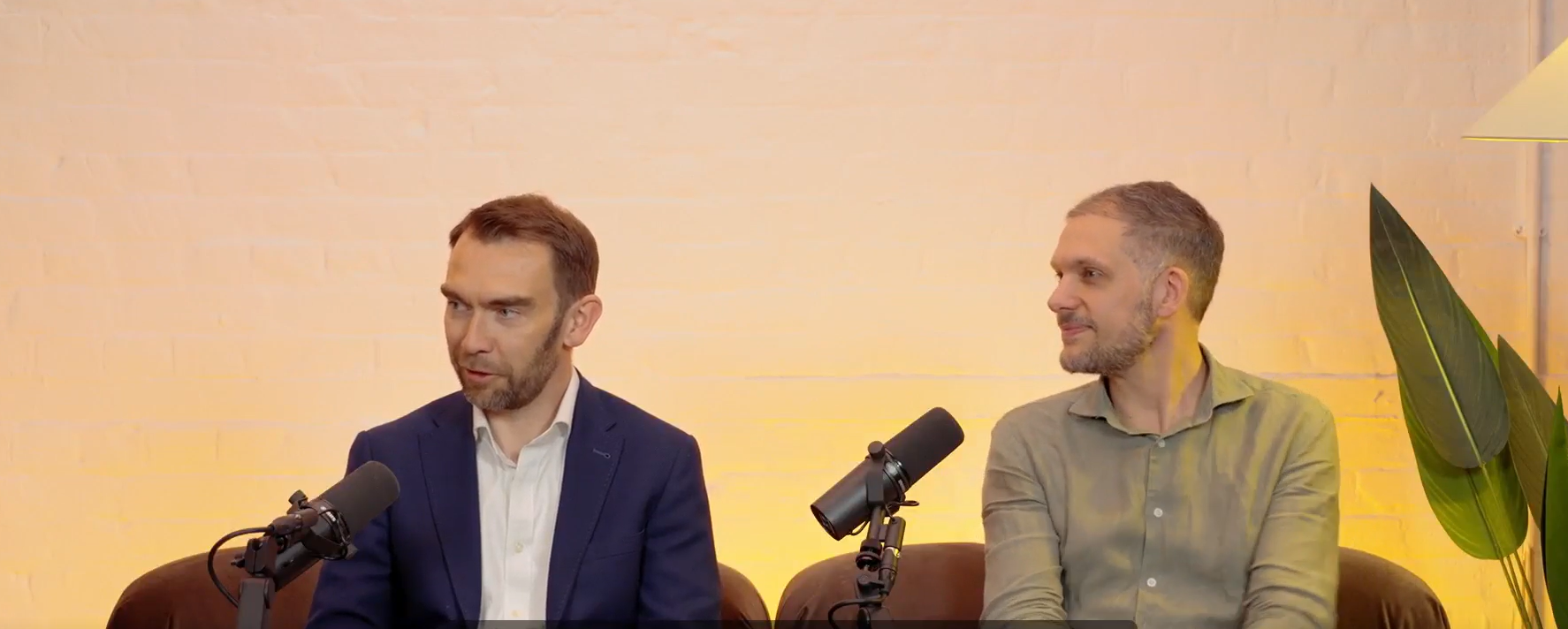
Primary care is often described as the front door to the NHS – but increasingly, it is also where the system’s tensions are most visible. In this episode of The Next 20, Associate Partner Eli Bond is joined by Simon Wheatley, Director of Place for West and North London, and Matthew Walker, Chief Executive of the National Association for Primary Care, to reflect on how primary care has changed over the past two decades, and what that means for the future.
Throughout the episode, they describe a story of a system waiting to be transformed, but one already adapting under pressure. The challenge is not whether change is needed, but how to navigate a set of competing demands – access, continuity, prevention and integration – without losing what makes primary care effective in the first place.
Rising expectations and the pull towards access
One of the most striking shifts discussed is the change in public expectation. As Simon puts it, there has been an “Amazonification” of primary care, where convenience and immediacy increasingly shape how people want to interact with services.
That shift matters. Faster access is important, and for many patients it is the right priority. But it also risks pulling primary care towards a more transactional model of care, one that can sit uneasily alongside its traditional strengths.
Because, as Simon reflects, primary care is at its most valuable when it is relational. That continuity – knowing a patient over time, understanding context, building trust – is not easily replicated in a system optimised purely for speed.
Access and continuity – a tension to design around
This leads to a more fundamental question about what primary care is trying to optimise for. For some patients, quick access will always matter most. For others, particularly those with complex or long-term needs, continuity is critical. The challenge is not choosing between the two, but recognising that both are necessary.
What emerges from the discussion is a shift in perspective – away from seeing access and continuity as competing priorities, and towards seeing them as a design problem. Different cohorts need different models, and the system needs to be flexible enough to respond to that reality. As Simon notes, this tension also reflects a deeper challenge – balancing today’s needs with tomorrow’s, and ensuring that the push for immediate access does not come at the expense of longer-term outcomes.
Neighbourhood health as a way of working, not a structure
The conversation then turns to neighbourhood health – a concept that has gained significant traction in recent policy.
There is broad agreement on the direction of travel. More joined-up, place-based care makes sense, particularly for those with complex needs. But there is also a realism about what it takes to deliver that in practice.
As Simon notes, integration is not something that can be declared or delivered through a single structural change. It is a process, built over time through relationships, behaviours and trust. Neighbourhood health, in that sense, is less a destination and more a way of working.
That distinction matters. It shifts the focus away from organisational design and towards how people actually work together on the ground.
Making it easier to do the right thing
A recurring theme in the conversation is that many of the barriers to better care are not conceptual, but practical.
Matthew is clear on this point – if we want people to work differently, the system has to make it easier for them to do so. Too often, integration requires individuals to work around structural barriers rather than being supported by them.
This is where much of the real work sits. Not in designing new models in theory, but in removing the friction that makes collaboration difficult in practice.
Prevention, incentives and system reality
The ambition to shift towards prevention runs throughout the discussion, but so too does a recognition of how difficult that is to achieve.
At the heart of the challenge is a mismatch between what the system is trying to do and how it is funded. As Matthew points out, organisations are often paid for responding to demand rather than reducing it.
That creates a structural tension. The system asks for prevention, but rewards activity. Until that is addressed, progress will remain uneven.
Innovation as doing the basics well
There is also an important thread on innovation – and a subtle but important reframing of what that means in primary care.
Innovation is not described here as breakthrough technology or entirely new models. Instead, it is about making existing approaches work better – improving flow, strengthening teams, and embedding ways of working that deliver consistently.
In that sense, innovation is less about invention and more about application – particularly around building trust and an evidence base. It is the discipline of doing the basics well, and doing them reliably at scale.
A central role, within a wider system
What comes through clearly is that primary care remains central to the future of the NHS. It is the point at which many of these tensions meet, and where solutions are most likely to take hold.
But it cannot do this alone. Its role is increasingly one of coordination – working as part of a broader system around the needs of patients and populations.
Conclusion
Primary care is not short of ideas, ambition or direction. What this conversation highlights is the harder task of making those ambitions work in practice. The future will not be defined by a single reform, but by how well the system manages a set of persistent tensions – between access and continuity, prevention and demand, structure and behaviour.
The opportunity for leaders is to focus less on wholesale redesign, and more on making the system work better as it is – clearer priorities, simpler pathways, and a relentless focus on what delivers value for patients.
The PSC exists to make public services brilliant. If these themes resonate – from balancing access and continuity, to making neighbourhood health work in practice – do get in touch with Eli Bond to continue the conversation.
Latest News & Insights
Building from the bottom up: Lord David Blunkett’s Kerslake Memorial Lecture
At our Third Kerslake Memorial Lecture, Lord David Blunkett explored devolution and the future of…
The PSC in Conversation: Turning health data and technology into better care
Caroline Cake, CEO and Co-Founder of Kneu Health and The PSC alumna, joins Antonio Weiss to discuss…

The PSC in Conversation: Putting people at the heart of their care: Patient editable access on the Universal Care Plan
Since patient editable access to London's Universal Care Plan launched through the NHS App,…