17/12/2025
Insights
Launching The Next 20: What Two Decades of Public Service Tell Us About the Future
David Seymour and Russell Cake, founders of The PSC, join Antonio Weiss to reflect on 20 years of change, and what it will take to redesign public services for the decades ahead.
As The PSC approaches our 20th anniversary, this launch episode of our latest series, The Next 20, does more than look back. It sets out an ambition – not just to celebrate two decades of work in public services, but to use that milestone as a moment to ask bigger, harder questions about what comes next.
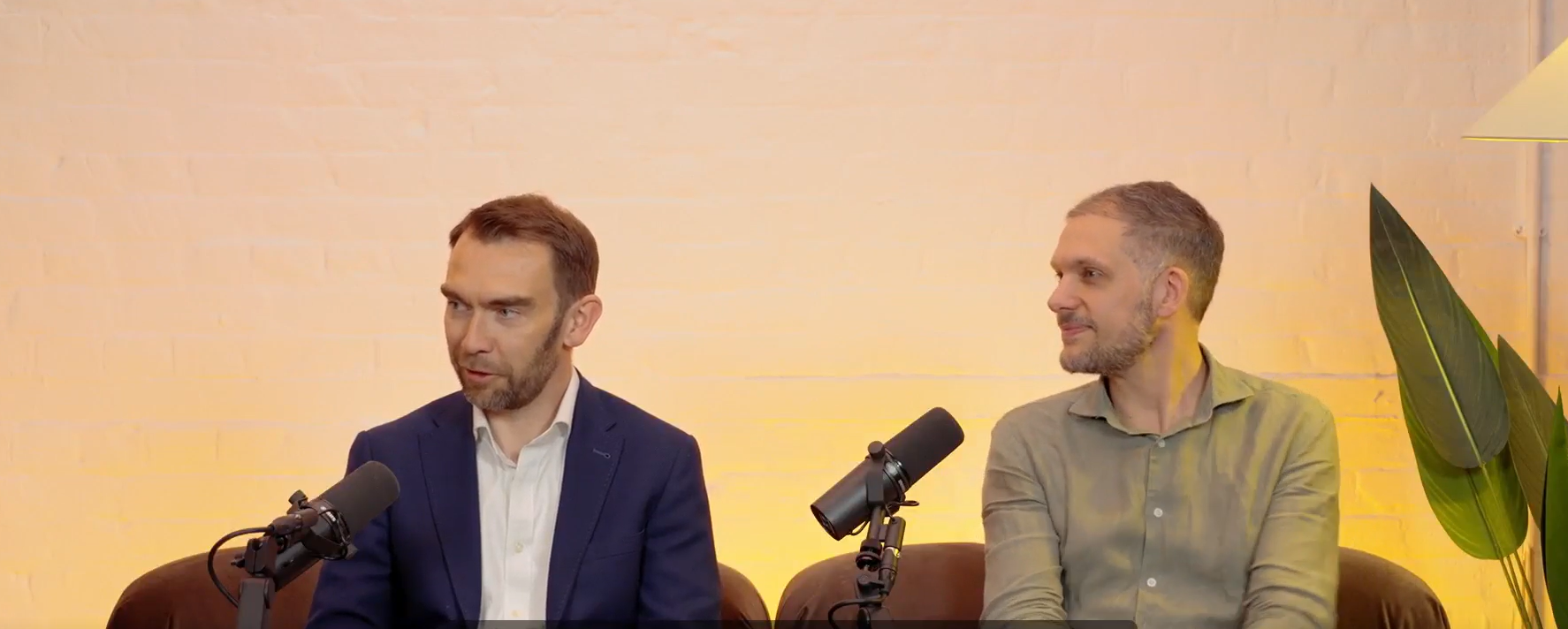
In conversation with The PSC founders Russell Cake and David Seymour, Antonio Weiss reflects on why The PSC was created, what has changed since 2006, and what the next 20 months and next 20 years demand from public service leaders. It is a conversation rooted in optimism, but grounded in realism – shaped by financial constraint, rising expectations and rapid technological change. At its heart is a belief that still defines The PSC today – that public services can be better, and that redesigning them well is both possible and necessary.

Why The PSC was founded
The PSC began life in 2006 as 2020 Delivery, born from what David describes as a mix of experience and optimism. Reflecting on his time in the military, the Prime Minister’s Delivery Unit and McKinsey, David recalls seeing a gap – the need for a mission oriented consultancy focused solely on public services, working alongside public servants and delivering genuine value for money.
“There was a sort of naive optimism that we could really make a difference by 2020,” he reflects. The name captured both a personal milestone, a common interest in cricket, and a belief that public services could be transformed within a generation.
Russell shared that conviction. Both founders had seen first hand how complex, fascinating and impactful public services could be when performance, outcomes and citizens truly mattered. As Russell puts it, public services are different because they are about far more than profit. “It’s phenomenally interesting having much more than profit to worry about.”
From the very first project at the Royal Surrey in Guildford, the model proved its worth – practical, trusted support for leaders grappling with quality, finance and system wide challenges.
Why public services matter
A recurring theme throughout the conversation is why public services matter so deeply. For Russell, quality is central. Public services should not merely be good enough, but good enough that people actively choose them and feel confident paying for them through tax. “You want people to want to choose them rather than private sector alternatives.”
David’s perspective is shaped by growing up in a public service household and working at the heart of government reform. He reflects on the Prime Minister’s Delivery Unit as a formative experience – a small, focused, data driven team proving that change was possible when priorities were clear and delivery mattered.
That belief still holds – but the context has changed.
Redesign is not optional
One of the clearest messages from the episode is that public services must constantly be redesigned. Changes in technology, evidence and population need mean that yesterday’s models rarely meet today’s demands.
Throughout the conversation runs a powerful diagnosis of the core challenge facing public services today – that many organisations are still trying to meet 21st century needs using 20th century systems, structures and service models. This mismatch shows up in rising demand, fragmented experiences and frustrated staff, and it underlines why incremental change alone is no longer enough.
“Yesterday’s design of public services is not actually the best design for today,” Russell explains. When redesign does not keep pace, quality suffers and expectations go unmet.
COVID-19 stands as the most visible example of rapid redesign, with whole services transformed in weeks. But the challenge now is sustaining that pace of change in more stable times.
David frames this through four long term trends – data and digital, diversity of need, rising expectations and disparities in outcomes. Together, they create both pressure and opportunity. The tools to improve services exist, but using them well requires system wide thinking.
Quality, outcomes and the social contract
Quality is not a nice to have. It is fundamental to the social contract. When public services fall too far behind expectations, people opt out – paying twice through taxes and private provision.
As David notes, “If that gap grows too big… you feel like you’re paying twice.” Maintaining public trust means designing services that deliver real value, fairness and consistency.
Framed through public value design, quality is not just about efficiency or performance metrics. It is about whether services genuinely improve people’s lives, reduce inequality and create outcomes that justify collective investment over the long term.
This is why metrics matter, but also why they are difficult. Public services cannot rely on simple profit and loss. Instead, leaders must define what value means for citizens, design around that, and measure progress without becoming slaves to targets.
Public value is built through systems
Some of the most powerful examples shared in the episode focus on system redesign rather than isolated fixes.
This is where the PSC’s approach of Public Value Design (PVD) comes to the fore. Rather than starting with organisational boundaries or individual interventions, PVD begins with the outcomes that matter most to citizens, and works back through the whole system – incentives, data, technology, processes and culture – to deliver them sustainably and at scale. Russell highlights cancer one stop shops – redesigned pathways that bring diagnostics together, reduce waits dramatically and improve patient experience.
These changes are not just technical. They often require aligning incentives across the system, challenging payment models and redesigning processes around users and staff.
As Antonio reflects, fixing one pathway does not automatically fix the system. Lasting change comes from understanding how all the parts connect.
The next 20 months – moving faster together
Looking ahead, the founders are clear that many answers already exist. Proven approaches, digital tools and service models are working in pockets across the country. The challenge is scale and pace.
David describes the next phase as a race – not to invent everything anew, but to spread what works. “Where is somebody else doing something that I could just pick up and use?” Curiosity, collaboration and critical thinking become essential leadership traits.
Russell reinforces this with a call for what he terms shameless copying – fast following what works elsewhere, while laying the foundations for longer term transformation.
The next 20 years – reasons for optimism
Despite political uncertainty and fiscal pressure, the tone of the conversation remains optimistic. The ingredients for better public services are there – technology, design capability and committed people.
Examples like genomic medicine and continuous glucose monitoring illustrate how rapidly costs can fall and capability can grow. What once cost millions can become routine, transforming prevention, diagnosis and care.
But technology alone is never enough. As both founders stress, the real work lies in redesigning services around people – citizens and staff – and building the capability to use new tools well.
As Russell puts it, the challenge is turning “perfectly possible” into reality.
A continuing mission
As The PSC enters its third decade, this episode is a reminder of why the organisation exists. Making public services brilliant is not a slogan. It is a long term commitment to optimism, humility and delivery.
For public service leaders navigating immediate pressures, the invitation is clear – lift your eyes to the horizon. Invest in collaboration, curiosity and evidence. Redesign boldly. And remember that better public services are not only possible, but essential for a stronger, fairer society.
The Next 20 series will continue that conversation – looking back, looking forward, and working out what needs to happen now to shape the decades ahead.
Make sure to listen to the full podcast episode on our Spotify channel, The PSC in Conversation, or on your preferred podcast platform.
Latest News & Insights.
The Next 20: The future of Primary Care
Primary care is under pressure to deliver faster access, better outcomes and…
The Next 20 Live: Making AI work in public services - from opportunity to impact
AI is already shaping public services – but its value depends on how it is…

Improving Cultures of Care to Transform Productivity and Safety
Our newly published white paper, grounded in evidence from 163 inpatient wards,…